


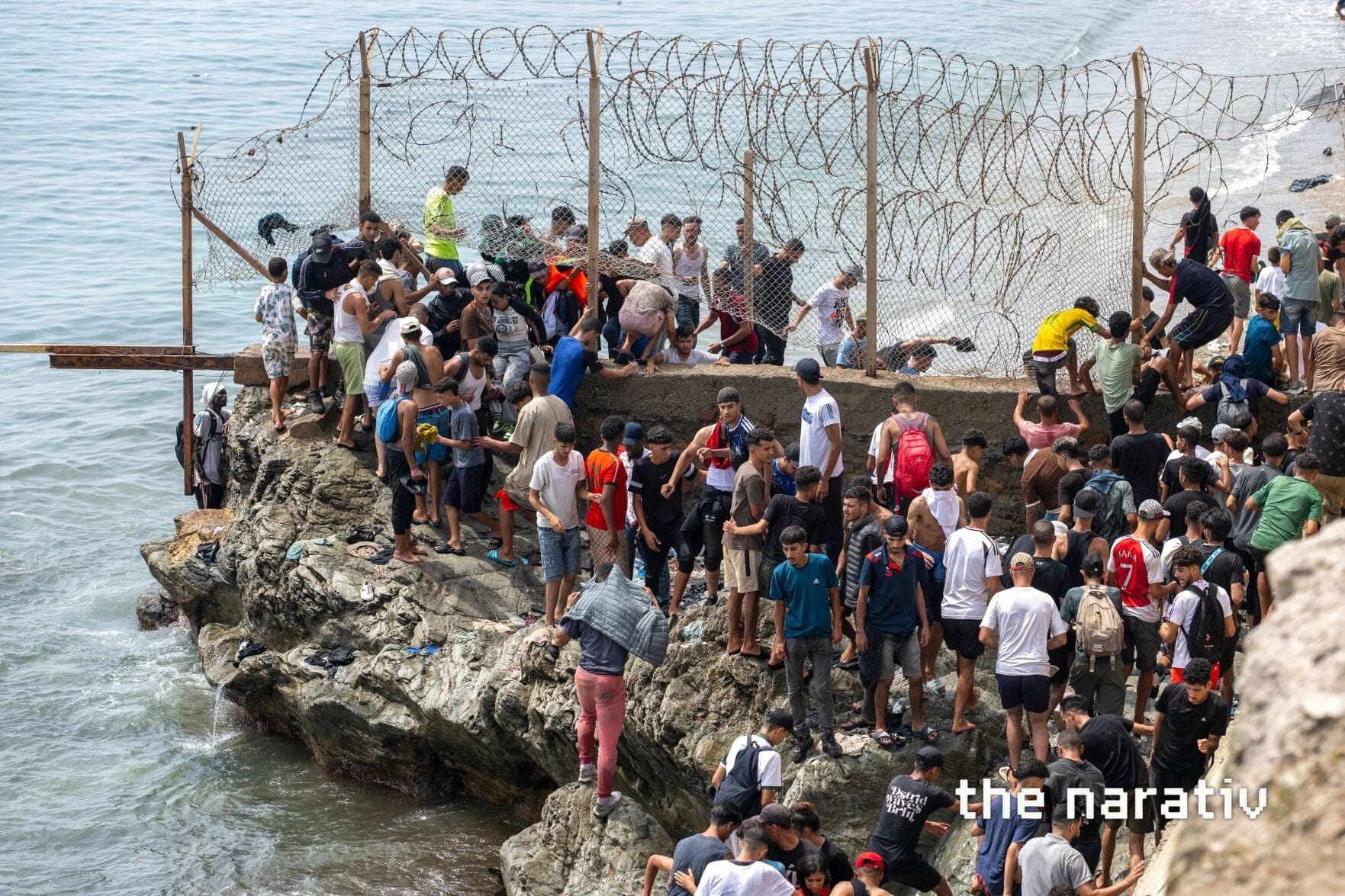
Start with the place. Ceuta is Spain — a Spanish city of 84,000 on the northern tip of Africa, bordering Morocco, separated from Europe by nine miles of sea. To reach mainland Europe from Ceuta you still have to cross the Mediterranean. Almost nobody did.
Here is what actually happened. Starting Thursday, roughly 50,000 people crossed from Morocco into Ceuta — swimming around the breakwater at Tarajal or climbing the border fence. Spain’s Interior Ministry counted the crossings; Ceuta’s president, Juan Jesús Vivas, puts the number as high as 60,000. At least 67 of them died — most drowned, others were crushed against the breakwater and the fence. The count is Spain’s, and it is still rising.
Then, almost as fast, it reversed. By six on Friday evening, 48,300 had walked back into Morocco — hungry, unhoused, and met with hostility, some told Reuters. Spain laid a 500-metre floating barrier across Tarajal on Saturday morning; by midday, soldiers were escorting the last swimmers back. The city that was invaded on Thursday was emptying by Friday night.
Why did it happen at all? A Guardia Civil spokesperson gave Reuters the trigger: a Spanish Supreme Court ruling in late June barred the summary return of migrants intercepted at sea. “It has been a slow trickle since the Supreme Court’s ruling, but today has been an explosion,” the spokesperson said. Morocco’s ambassador said the crossings were “not wanted by the Kingdom of Morocco,” and Pedro Sánchez thanked Rabat for cooperating.