


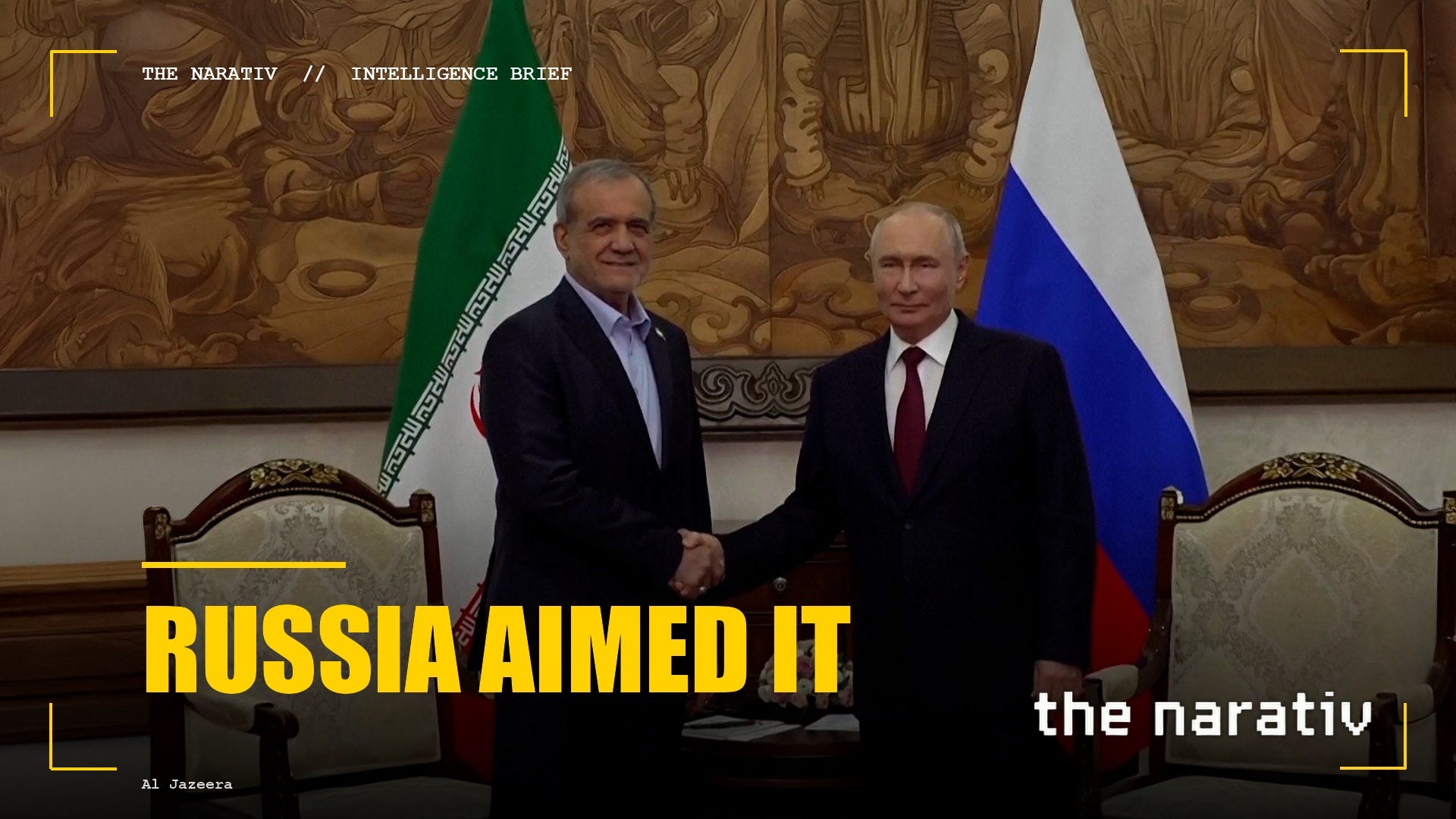
CNN reported overnight that fourteen Russian satellites crossed Prince Sultan Air Base in the two days before an Iranian missile burned an American radar plane on its tarmac. CNN built the finding from European Space Agency and Kayhan Space tracking data and named one craft: Cosmos 2573, a Russian military spy satellite. Unnamed US officials told CNN the imagery "likely" helped Iran aim. "Likely" is CNN's word.
Trump had the warning three weeks earlier. CNN and the Washington Post reported on March 6 that Russia was handing Iran intelligence on American troops, ships and aircraft, most of it satellite imagery. A reporter asked Trump that Friday. "What a stupid question," Trump said. He had "no indication of that whatsoever." Karoline Leavitt said whether or not it happened, "frankly, it does not really matter."
Trump telephoned Putin on March 9. He asked for the call, which ran about an hour. The Kremlin called it "businesslike, frank and constructive" and said Putin offered "considerations" on settling Iran. The White House published no readout.
Steve Witkoff gave the result on CNBC the next morning. "On the call with the president, the Russians said they have not been sharing," he said. "We can take them at their word. Let's hope that they're not sharing."
On March 12 Trump's Treasury issued General License 134, authorizing the sale of "crude oil and petroleum products of Russian Federation origin" loaded from that day. Six days after the warning, Trump put Russian oil back on the water. On March 13 he told Fox News Radio Putin "might be helping them a little bit, yeah… they do it and we do it."
Fifteen days after the license, the plane burned. What Trump has said about Putin since — at the G7, to the Kremlin, to Zelensky in Ireland on Sunday — is the rest of this story.
