


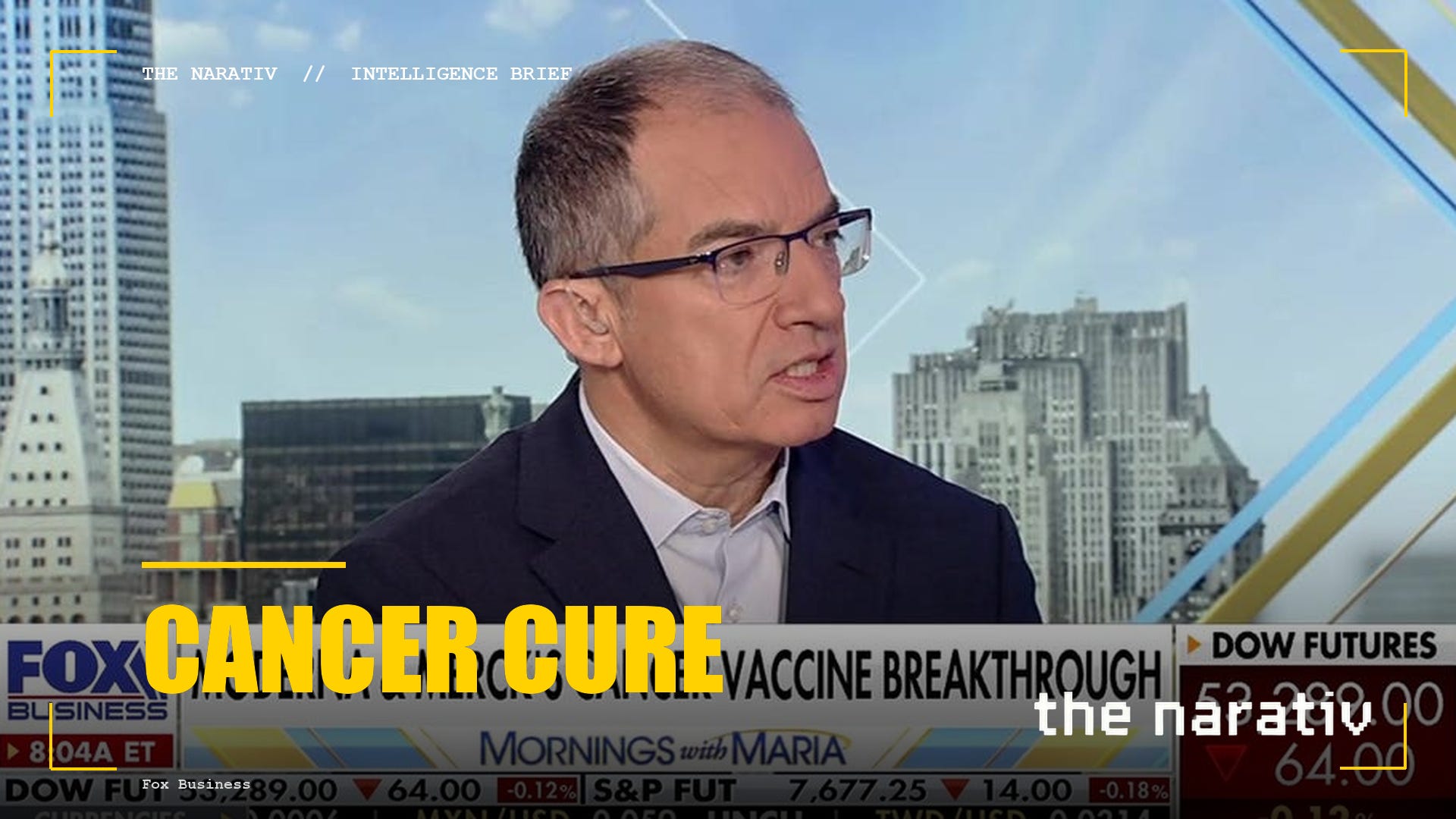
Moderna and Merck proved last month what a century of cancer researchers could not. A vaccine built from a single patient’s tumor stopped melanoma from returning — and it did it in a Phase 3 trial large enough to count.
The INTerpath-001 trial enrolled 1,137 patients with surgically removed stage IIB through IV melanoma. Two-thirds received intismeran autogene — a personalized mRNA vaccine — plus Merck’s immunotherapy drug Keytruda. The rest received Keytruda alone. At a prespecified interim analysis, the combination met both its primary endpoint, recurrence-free survival, and a key secondary endpoint, distant metastasis-free survival.
No mRNA cancer vaccine had cleared a Phase 3 trial before. No individualized neoantigen therapy had either. This one did both on the same day.
How the vaccine works. Surgeons remove a patient’s melanoma. A lab sequences the tumor’s DNA and identifies up to 34 mutations unique to that cancer. Moderna encodes those mutations into a synthetic mRNA molecule — the same platform the company used to build its COVID-19 vaccine in 2020. The shot teaches the immune system to hunt cells carrying those exact mutations. Nine vaccine doses, nine rounds of Keytruda, roughly a year of treatment.
Five-year follow-up data from the earlier Phase 2b trial, presented at the 2026 ASCO Annual Meeting in June, showed the combination cut the risk of recurrence or death by 49 percent compared with Keytruda alone. The risk of cancer spreading to distant organs dropped 59 percent. The Phase 3 confirmed that benefit at scale — in a trial more than seven times larger.
