


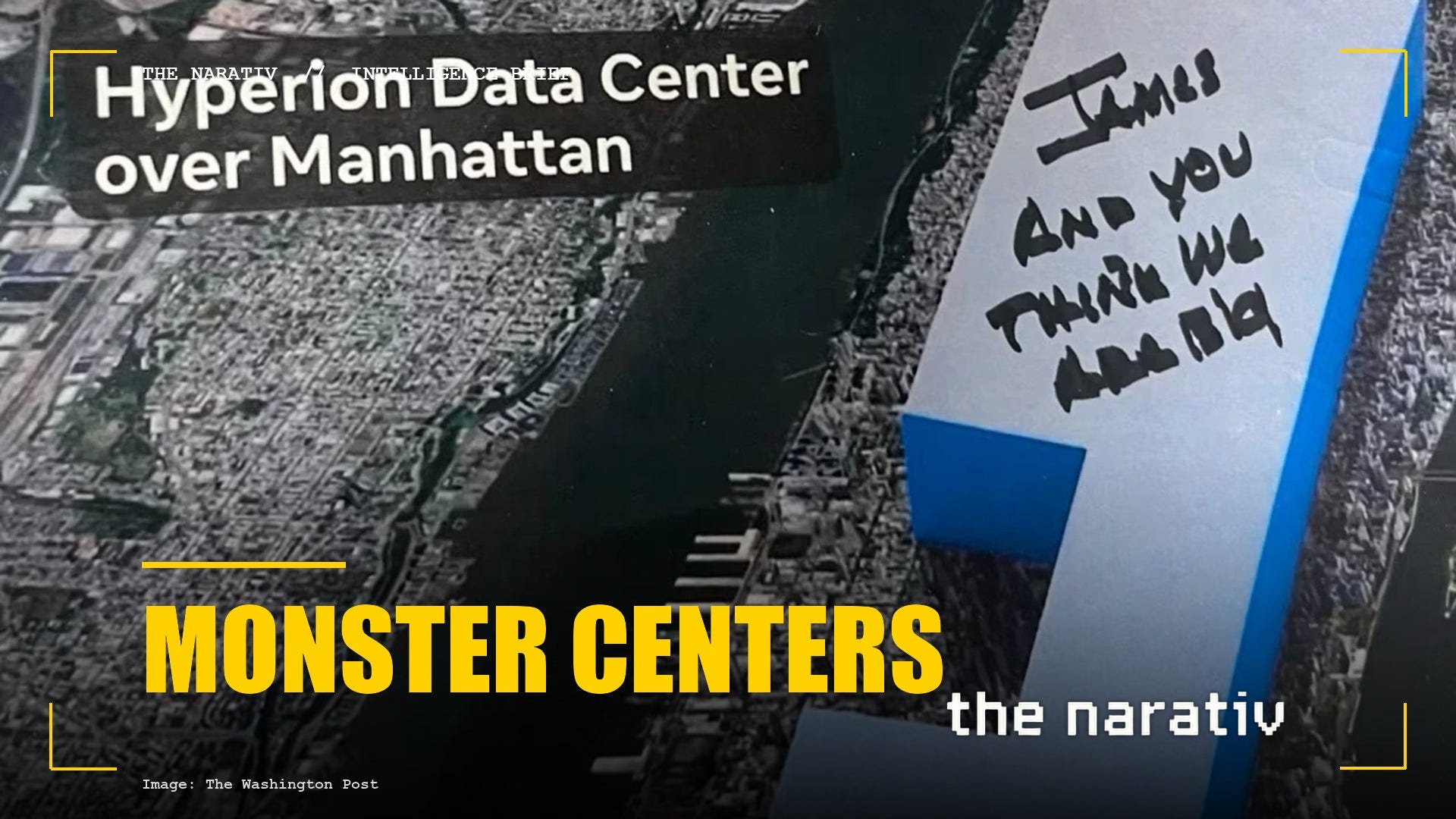
Meta is building a data center in rural Louisiana that dwarfs Central Park, and the Washington Post published the satellite pictures this morning. The campus, called Hyperion, will not hold the title for long: if every center now planned gets built, it ranks only fifth in the country by 2030.
Elon Musk runs Colossus 2 outside Memphis, today's largest operating center, on temporary gas turbines while he builds his own power plant across the state line in Mississippi. Residents next to the first Colossus have already protested the fumes from its generators.
Sixty-nine percent of Americans oppose a data center in their own community, an NBC News poll found this month, and 57 percent of Republicans agree with them. "I don't think this is a Republican or Democratic issue," Dawn Vogel, a Republican county supervisor in Buchanan County, Iowa, told NBC.
Trump has claimed the build-out as his own. "Let Data Reign," he posted in August, and he warned that towns which turn the centers away "end up being backwards and poor." In private, he admired the scale. Among the handwritten notes the Washington Post obtained from Trump to his White House ballroom architect, James McCrery, is a printout of Meta's Hyperion laid over Manhattan, with Trump's scrawl across it: "James, And you think we are big." Their power bills say otherwise. The average American household paid 18.31 cents a kilowatt-hour in July, the federal Energy Information Administration reported last week, five percent more than a year earlier. Sixty-two percent of Americans believe data centers push those bills up, Economist/YouGov polling found in August, and 52 percent of Trump's own 2024 voters agree. One Republican governor has already acted on those numbers, and the Post has counted how many more of the giants are on the way.
