

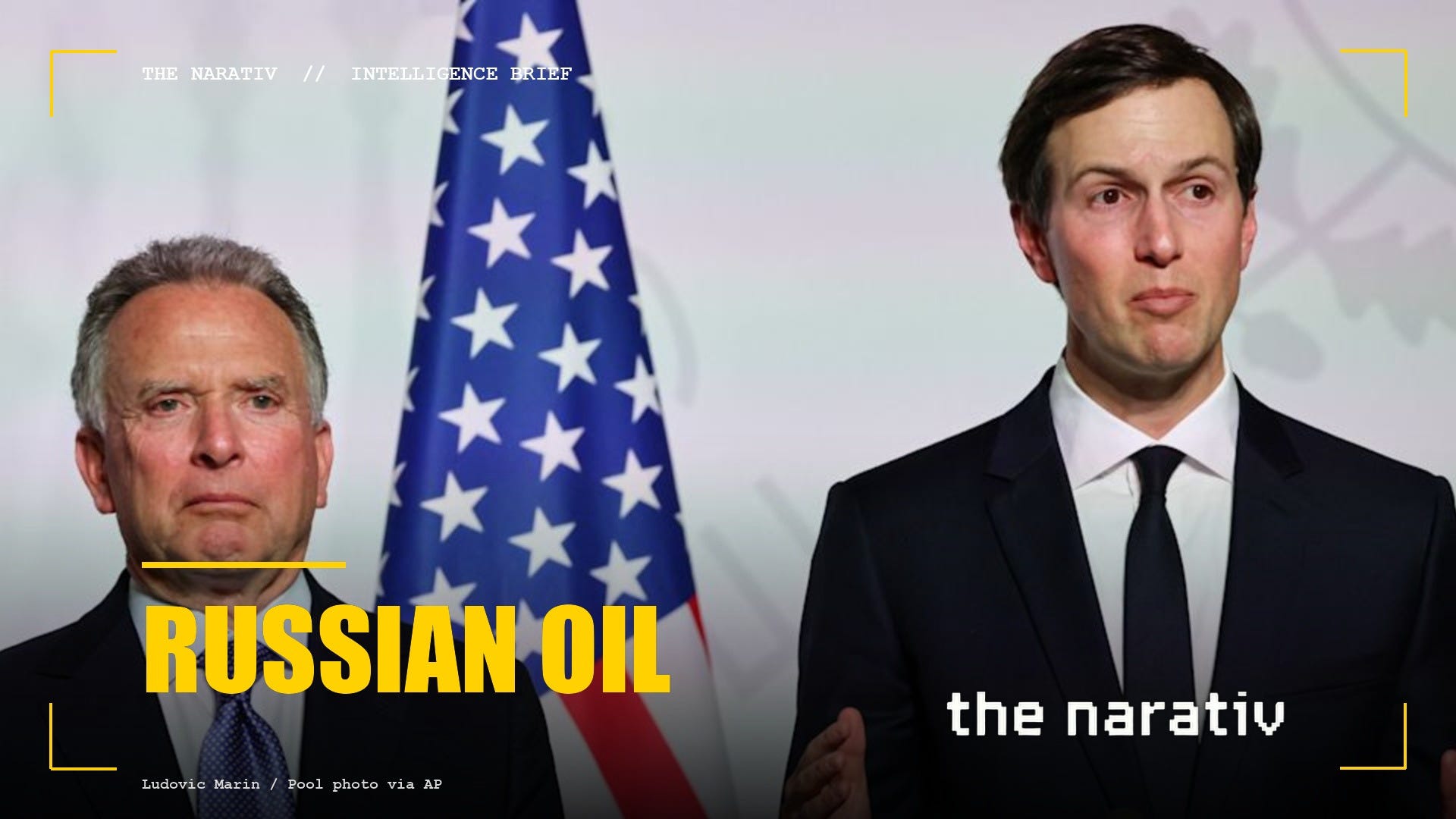
Jared Kushner and Steve Witkoff, the two men Donald Trump sent to end the war in Ukraine, helped negotiate the US government's share of a multibillion-dollar purchase of Russian oil assets, a senior administration official confirmed to The New York Times on Saturday.
The assets belong to Lukoil, Russia's biggest private oil company: oil fields in Cameroon, refineries in the Netherlands, Bulgaria and Romania, gas stations in New Jersey. Trump sanctioned Lukoil a year ago and forced it to sell. The Times reported that the lead bidders are now a group that has done business with Kushner, Witkoff's family or Trump himself, and that Vladimir Putin put the deal in front of the envoys.
Putin raised it at the Kremlin on 5 September, three people told the Times. He wanted it done, one of them said, to show Russians they can do business with the United States. The Americans said they would work on it.
Washington wanted goodwill in Moscow and cheaper fuel; the refineries make the diesel and jet fuel that have run short since the Iran war began. The buyers wanted something simpler. A US signature releases the assets from American sanctions and, in the Times's words, instantly increases their value.
So who is lining up to buy what the sanctions froze, and what does each of them owe the men negotiating the peace?
