


Trump has spent a year turning “debanking” into federal policy. He signed the Guaranteeing Fair Banking executive order on August 7, 2025 — one year ago today — ordering regulators to hunt the bankers who supposedly punish conservatives. He sued JPMorgan Chase for $5 billion on the same theory this January. The courtroom version of the story has not gone to plan, and the Capital One case in Miami shows exactly how far off plan it has gone.
Trump’s companies sued Capital One on March 7, 2025, in Miami — twelve plaintiffs, among them Eric Trump personally and the Donald J. Trump Revocable Trust, with Don Jr. holding the trustee’s pen. The bank, they pleaded, terminated roughly 300 accounts on June 7, 2021 — the plaintiffs count 385 — out of “political and social motivations and Capital One’s unsubstantiated, woke beliefs that it needed to distance itself from President Trump.” A bottled-water company, a winery, a golf course, a payroll firm — debanked, the complaint says, for the name on the door.
Judge Roy Altman threw the case out on March 23, 2026, and told Trump’s lawyers to come back with facts. They came back on July 17 with a second amended complaint whose core section — ten pages titled “January 6, 2021: The Political Trigger” — is blacked out in full, with twelve exhibits sealed beside it.
Trump’s lawyers hid their persecution case behind their own redaction bars. The bank left everything it filed in plain sight — and answered two weeks later.
On July 31, Capital One’s lawyers stated the reason in open court. The bank closed the accounts “for anti-money laundering (’AML’) reasons,” they wrote — the product of “months of analysis and a careful review by Capital One’s AML team,” run by staff with “decades of law enforcement experience.”
Bankers guard that sentence with federal law. Compliance officers file suspicious-activity reports in secret, and the Bank Secrecy Act bars a bank from confirming a report even exists. Capital One kept its reasons confidential for five years — no press release, no leak — and says the law barred it from telling Trump himself. Only one man could drag a bank’s money-laundering verdict on a president into the public record: the president, suing his own bank until it explained itself.
Trump filed that lawsuit. He built the paper, then he built the courtroom that printed it.
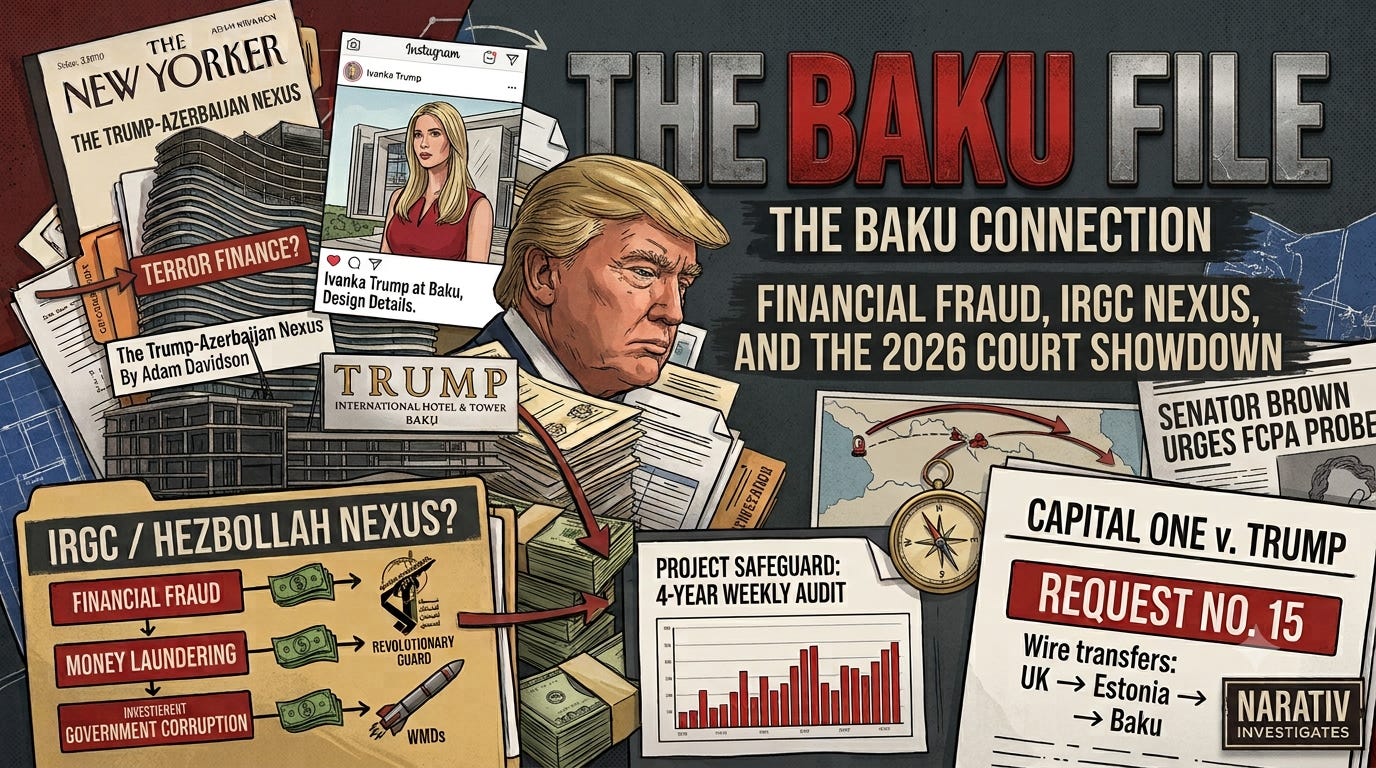
Trump’s own lawyers found more in the bank’s production, and said so at a discovery hearing on July 27. “Weekly, from 2017 forward, Capital One engaged in a scheme — they called it Project Safeguard,” attorney Michael Mena told Magistrate Judge Yeney Hernandez, describing a program in which the bank “very carefully reviewed every transaction” on the family’s accounts, for the length of a presidential term. The AML team wrote its findings into a memorandum — transactions “dating back to at least 2017, and even further in some instances” — and that memorandum now sits under seal as the primary exhibit to Trump’s own complaint. The bank calls Safeguard protection. Trump’s lawyers call it proof of pretext: four years of watching, they argue, and the bank only reached for the file when the politics changed. Either way, a bank ran a standing weekly audit of a sitting president’s money, and no one outside the case knew until a court reporter typed it up.
Anne P. Mitchell, the attorney and federal law author who has tracked the docket for Notes from the Front, reads the seal the way a litigator reads silence: the memos “have to have more in them than what Capital One said in this motion.” The bank accused no one of a crime. Its lawyers said the review flagged the accounts, and said nothing about what the review found. The law commands that silence. So the findings can surface in only one place: discovery.
While Trump’s lawyers fought over the redactions, the bank’s lawyers dug. They served their first document demands on the Trump plaintiffs on March 30, 2026, then filed the list publicly on July 13, buried as Exhibit B.1 to a discovery-hearing notice. Nobody reported what sits inside it. Four demands name the transactions they want explained.
PAID SUBSCRIBERS CAN ACCESS A DEEPER DIVE BELOW THE PAYWALL
