

THE GREATEST HEIST 🕵️ · Book Two · Chapter 7 of 9
← The Bear · All chapters · The Extraction →

If Jeffrey Epstein hadn’t set the first domino in motion, Bear Stearns might have survived the coming inferno. Epstein didn’t just push—he engineered a scheme whose success depended on Bear Stearns’ collapse. Deep within the labyrinth of questionable assets buoyed by mortgage-backed securities lay the true heart of Bear: Liquid Funding Ltd. More than an investment vehicle, it was a vault—a fortress shielding the firm’s most powerful stakeholders. But as with many things in life, saving Liquid Funding would require two skills Jeffrey Epstein had mastered: timing, and access.
By 2006, Bear Stearns had become a liquidity pump.
The firm’s 2007 Investor Day presentation boasted: “#1 in U.S. MBS for the third year in a row.” “Top 5-ranked Global CDO underwriter.” Bear originated mortgages, packaged them into securities, labeled them AAA through compliant rating agencies, and sold them to institutional investors hungry for profits and higher stock prices. The machine ran day and night—mortgages in, securities out, fees skimmed at every step.
But what was touted as an innovation was actually a scheme built on fraud—built on liar’s loans—mortgages peddled to unsuspecting homeowners—and companies created entirely to extract profits while generating toxic debt.
Commercial mortgage-backed securities—CMBS—were the toxic waste of the real estate world: casino debt, distressed properties, overleveraged developments that couldn’t even service their interest payments. Bear Stearns specialized in taking this refuse, repackaging it into tranches, securing AAA ratings for the senior pieces, and quietly feeding it back into the system.
One of the best customers for Bear Stearns’ CMBS was Donald Trump.
Trump’s casinos had been functionally bankrupt since 1991. The Taj Mahal, the Plaza, the Castle—all hemorrhaging cash, all drowning in debt, all kept alive through an endless cycle of refinancing. Every few years brought a ritual: another restructuring, another round of bondholders taking haircuts, Trump extracting management fees, and Bear Stearns repackaging the debris into new securities for the next wave of investors.
Ace Greenberg—Bear’s legendary chairman—had been doing this for Trump since the early ‘90s. When every other bank walked away from the casino debt, Bear stayed. When Trump needed bridge financing that no legitimate institution would touch, Bear found a way. They’d take the Trump casino bonds, bundle them with other commercial mortgages, slice them into CDOs, and feed them into vehicles like Liquid Funding.
This was the beautiful scam: Trump’s worthless casino debt, rated junk on its own, became AAA-rated securities when buried inside a structured product. Rating agencies blessed it, institutional investors bought it, and money market funds—the supposed safest investments in America—held it. No one realized they were funding a gambling operation—and a suspected Russian money laundering front—that had never turned a profit.
William K. Black calls it “control fraud”—when those in control weaponize a company to defraud everyone else. Black, a federal regulator during the Savings & Loan crisis, watched the pattern repeat: not robbing banks from the outside like Willie Sutton, but from within, using the institution itself as the instrument. The company makes doomed loans, executives extract bonuses on manufactured short-term profits, and when collapse comes, they’ve already cashed out. The fraud isn’t a glitch—it’s the business model.
Bear Stearns wasn’t a bank that made bad bets by accident. It was pumping debt into corporations at 14% interest rates that could never be repaid—A machine designed to originate toxic debt, disguise it as safe, sell it to pensions and money market funds, and siphon off fees at every step. The insiders knew the loans were bad, the ratings were fiction, and that collapse was inevitable. They didn’t care; they’d be rich before it happened, and first in line for the bailout.
By 2006, Liquid Funding held $6.7 billion in these securities—leveraged 180-to-1. Commercial paper sat atop mortgage-backed securities, themselves backed by mortgages already in default. A $100 million equity cushion supported $6.7 billion in debt. The entire structure was a bomb waiting for a spark.
Bear Stearns wasn’t the only bank misleading the American public. Nor was Liquid Funding the only offshore vehicle holding these toxic debts. But while all the others would crash with the market, Jeffrey Epstein’s SIV would be paid out in full.
“I think we both possess the skill of seeing patterns,” Leslie Wexner told Vicky Ward about his protégé, Jeffrey Epstein, in a 2003 profile. “But Jeffrey sees patterns in politics and financial markets, and I see patterns in lifestyle and fashion trends. My skills are not in investment strategy, and as everyone who knows Jeffrey knows, his are not in fashion and design.”
And there’s one pattern Jeffrey Epstein had seen many times before: When markets crash, when stock prices are pumped and dumped, the only way to win is to make sure you trigger the crash yourself. As with any bankruptcy, it gives you pole position to extract what you need.
That’s the scheme. That’s how you win big. In the case of Bear Stearns, the payout for participants would be $6.7 billion—a very good payday, if you could do it quietly and without attention. All you needed were the right people in the right places: the company’s CEO, the acquiring bank’s CEO, and the financial team advising the president. If it worked, they would walk away with a small fortune while the entire market crashed and burned around them.
With his $57 M redemption in April, Epstein had lit the fuse that would eventually implode Bear Stearns. By July, everything was playing out as expected—but in Miami, one person was threatening it all: a dogged prosecutor, hunkered down, facing the storm of the century and refusing to budge.
The Bear Stearns Enhanced Leverage Fund and the Bear Stearns High-Grade Structured Credit Fund collapsed on July 31, 2007—the very same day Epstein’s lawyers met with the US Attorney for the Southern District of Miami, Alex Acosta, without his chief prosecutor in the Epstein case.
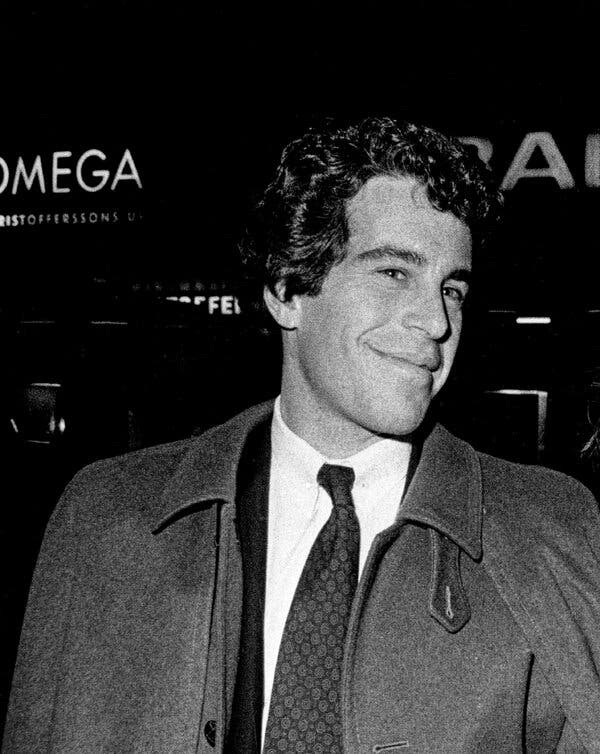
Marie Villafaña had spent eighteen months building her case: fifty-three pages, sixty counts—sex trafficking. Now she learned the so-called dream team was meeting with the U.S. Attorney and excluding her. She feared her case would be buried by Epstein’s defense attorneys—Kenneth Starr, Jay Lefkowitz, Alan Dershowitz—a multimillion-dollar lineup assembled to crush her work. Villafaña was determined not to let that happen, not with victims like Maria Farmer depending on her.
She signed the request on her desk: grand jury subpoenas for every financial transaction from January 1, 2003, to the present. Subpoenas went to JPMorgan Chase and other banks. Every transaction. Every wire transfer. Every cash withdrawal. Every shell company. Then she wrote to Epstein’s attorneys:
“(In other words, if the sex offense case is resolved, the Office would close its investigation into other areas as well. The matter has not been, and it does not appear that it will be, resolved, so the money laundering investigation continues, and Request Number 6 [seeking records of every financial transaction conducted by Epstein and his six businesses from ‘January 1, 2003 to the present’] will not be withdrawn.)”
Request Number 6 threatened to expose the entire architecture. If prosecutors followed the money far enough, they’d find Liquid Funding. They’d see Bear Stearns owned 40%. They’d see JPMorgan serving as Security Trustee. They’d see how Trump’s casino debt was laundered into AAA securities, and the $6.7 billion structure already dying—unable to roll its commercial paper as credit markets froze.
They would see how it all connected.
They would find Leslie Wexner.
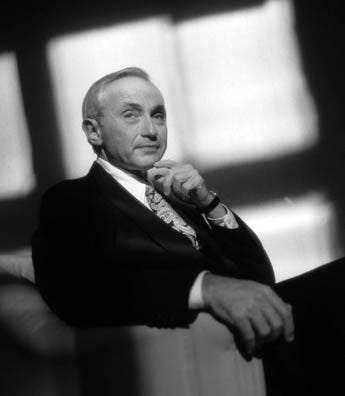
Epstein’s dream team had tried everything to delay signing the non-prosecution agreement. But as summer spilled into fall, Villafaña played the only ace she had left. She thought about Maria Farmer’s declaration—about being held captive in New Albany. She scoured Wexner’s police records, but found nothing tying him to criminal charges. He was either squeaky clean or very good at covering his tracks. But you don’t send in that kind of legal firepower unless there’s something to hide.
Then it dawned on her: if even the faintest whiff of Epstein’s activities was traced to the reclusive Ohio billionaire, the whole scheme would collapse. So she made another call.
Les Wexner. The Limited. Victoria’s Secret. Twenty-one years of business with Epstein. Power of attorney since 1991. Co-president of the New Albany Company. Office at The Limited headquarters in Columbus, Ohio.
She expected Wexner to simply call off his dream team. Instead, in the weeks following Villafaña’s call, Wexner—perhaps offering the greatest confession of guilt—severed his relationship with Epstein and Maxwell.
Within weeks, documents showed assets shifting: interests in Wexner’s Aspen ranch moved from Epstein’s entities to those controlled by Abigail Wexner. After twenty-one years, the umbilical cord was being cut.
Not because of the sex crimes—those had been happening for years, on Wexner’s properties, with Wexner’s security guards present.
Wexner was cutting ties because Villafaña’s financial investigation—Request Number 6—threatened to expose the network. The real operation. The reason Epstein was valuable in the first place.
When Epstein and his attorneys learned of the Wexner call, they were furious. In a complaint filed months later, Kenneth Starr wrote to the Deputy Attorney General:
“She calls Les Wexner to inform him of the investigation.”
“Villafaña threatened to broaden the investigation to include a money laundering violation, though all the funds expended were simply Mr. Epstein’s, and a violation of a money transmitting statute, though Mr. Epstein has no such business.”
The defense wasn’t panicking about the sex crimes—they were panicking about exposing the network.
For months, the attorneys tried to bully her into submission. But Villafaña never gave up.
On September 24, the non-prosecution agreement was signed.
Almost immediately, Wexner began breaking off ties. Epstein knew that if the plea deal became public—and if Wexner’s breakup was exposed—it could ruin everything he’d built. With the investigation closing in, he needed a way to explain it all to Jimmy Cayne and Bear Stearns without implicating himself. And he needed to warn Cayne.
Subscribe to continue reading and discover how Trump’s casino empire, Bear Stearns, and Epstein’s financial maneuvering collided to trigger the unraveling—and the secrets that were nearly buried forever.
