

THE GREATEST HEIST | BOOK 2 | CHAPTER 9 | THE BOMB
Howard Lutnick’s firm is a suspected Russian front, is tied to Epstein, and the 2008 crash.

The True Story of Donald Trump, Jeffrey Epstein, and the Greatest Crime in History.
I. THE SURVIVOR
Howard Lutnick has a knack for dodging catastrophe.
He built his identity on survival. Both parents gone by eighteen—his mother to lymphoma in seventh grade, his father to cancer five years later. He talked his way into Haverford College with no money, graduated, and joined Cantor Fitzgerald at twenty-two. By twenty-nine, he was president. By his mid-thirties, he ran the firm. A bond trader’s bond trader—sharp, relentless, convinced the world owed him nothing and he owed the world less.
But Lutnick is best known for surviving the largest terror attack on U.S. soil.
September 11, 2001. Howard Lutnick was not at his desk on the 101st floor of One World Trade Center. He was taking his five-year-old son Kyle to his first day of kindergarten. It was the only reason he was alive.
By the time the towers fell, 658 of Cantor Fitzgerald’s 960 New York employees were dead. His brother Gary among them.
The nation watched him weep on live television. He became the face of Wall Street’s grief and, in the months that followed, its resilience. He pledged twenty-five percent of the firm’s profits to the families of the dead. Within two years, Cantor Fitzgerald was more profitable than it had been before the attacks.
One survival event is notable. But Howard Lutnick has had more than one near-death experience—enough that you have to stop calling it luck and start asking whether he was privy to information that allowed him to dodge impending chaos.
Which brings us back to the crash of 2008—seven years after 9/11.
Every major financial institution in America was hemorrhaging money. The worst crisis since the Great Depression. With one notable exception: Cantor Fitzgerald earned eighty percent more than it had the year before.
Every time the world burned, Howard Lutnick walked out of the fire richer than he’d gone in.
Was it luck? Timing? The survival instinct of someone orphaned young, who learned to read the room before the room read him?
Or was it something else—the certainty of a man tipped off by those who saw it coming, moving at exactly the right moment?
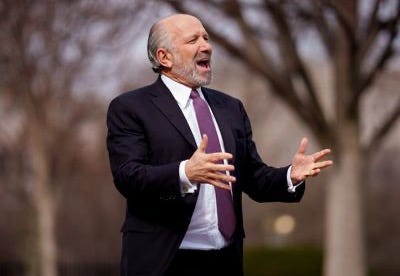
Howard Lutnick was Jeffrey Epstein’s neighbor on East 71st Street for years. The two houses shared a genealogy, if you will—both connected back to Leslie Wexner. They share a wall.
Both properties trace back to the same man. In the late 1980s, two separate companies purchased the adjoining townhomes. Both used the same address on their incorporation documents: a Columbus, Ohio address associated with Les Wexner’s Limited Brands. Wexner—or entities he controlled—acquired both properties. Then he distributed them. 9 East went to Jeffrey Epstein for one dollar. 11 East went to Howard Lutnick in 1998 through “Comet Trust” for ten dollars—transfer taxes indicating a value of approximately $7.6 million.
The man who built the vault. And the man who would trigger the sell-off. Neighbors. Both previously owned by Leslie Wexner. On a street with fewer than twenty houses.
The Greatest Heist is available to paid subscribers who fund all Narativ’s investigations. Help sustain our independent journalism by becoming a paid subscriber.
