


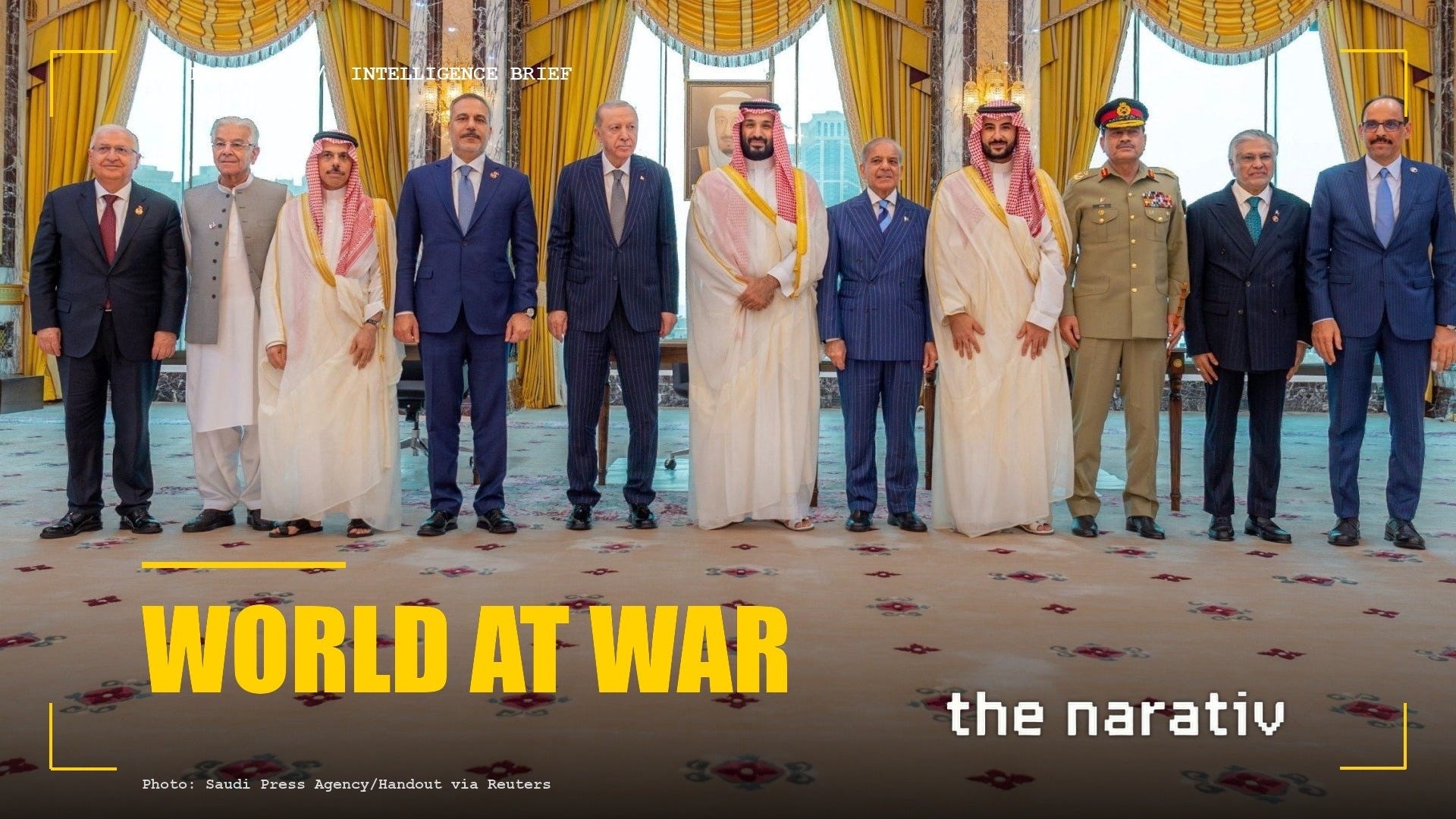
Trump promised Iran a quick end on Thursday. By Monday night the Houthis had hit Saudi Arabia, and Pakistan and Turkey had agreed to send forces to defend it.
In Denton, Texas, on Thursday, Trump said he was "ensuring that Iran will be very quickly ended," and he said the United States would win "right after the election." On Friday a U.S. official told Al Jazeera a third carrier group was on its way, and the Theodore Roosevelt group and the Makin Island group left port early this month.
On Sunday in Tehran, foreign ministry spokesman Esmaeil Baghaei said Iran hoped reports of a Pakistani deployment for war in Yemen were untrue, and he warned that any new intervention would only complicate the situation.
On Monday in Riyadh, Saudi Arabia, Pakistan and Turkey put the Mecca pact into force for the first time since they signed it in August. Their committee decided to take the necessary measures "to provide the agreed military forces and capabilities and ensure their rapid deployment in the Kingdom." Pakistan already had forces in the kingdom, and Turkey has not confirmed a deployment.
Field Marshal Asim Munir helped broker Trump's talks with Iran. In January, Munir stood behind the chief executive of the Trump family's crypto firm, World Liberty Financial, in Islamabad while he signed a deal with Pakistan's finance minister. On Monday he sat in Riyadh as Pakistan agreed to deploy forces to defend Saudi Arabia against Iran's ally. The broker has taken a side.
Pakistan calls its part support. Defense Minister Khawaja Asif said Pakistani and Turkish forces are "playing a supporting role," with reconnaissance, while "the combat is practically being conducted by Saudi Arabia's own forces."
On Monday evening the Houthis struck two Saudi airports, at Jazan and Najran, and injured at least three people. The strikes came as the Saudi-led coalition said 100 fighter jets were backing the Yemeni government's push to retake territory from the Houthis.
Overnight, Ukraine sent drones at the Moscow region. The city's mayor counted about 650 headed for Moscow, most of them shot down, and the regional governor counted two dead.
Pakistan has nuclear weapons and Turkey is in NATO, and both agreed on Monday to deploy forces to defend Saudi Arabia against Iran's ally, four days after Trump promised Iran a quick end. That runs against Trump in two ways. A war he said was ending now has a nuclear power and a NATO member committed to the Saudi side of it. And the forces they committed answer to Riyadh, Islamabad and Ankara, so the pace of the fight is set by governments Trump does not command and cannot order home. Pakistan carries his messages to Tehran, and Iran warned on Sunday that any new intervention would only complicate the situation, so the channel Trump used for his Iran talks now runs through a country that has taken a side. Put together, it is a world at war.
What comes next is in other hands. Watch for Turkish forces to arrive in the kingdom, because the moment they do, the Houthis have troops from a NATO member within reach and Iran has to decide whether its ally fights them. Watch the Roosevelt group, which left port early this month, because Trump told TIME that more bombing after the midterms was "possible." And watch the calendar. The midterms are Nov. 3, Trump promised the win "right after the election," and he has four weeks to end a war that spent the last four days getting bigger.
